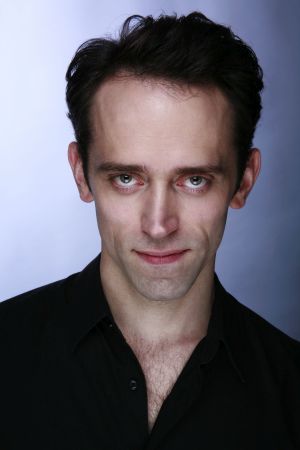
Trevor Eliot-Bowes

Trevor performed with the Cantate Choir in the Handel’s Messiah in January 2016.

TrevorEliotBowes2015Colour300W

Bass-baritone Trevor Eliot Bowes was born in Victoria, Canada and studied at the University of Toronto and RSAMD. He made his British debut as Trulove in The Rake’s Progress at the Aldeburgh Festival where he has also performed Purcell’s King Arthur and The Faerie Queen. Trevor has performed in St. Petersburg, Moscow and Hamburg as Fedro in Mattheson’s Boris Goudenow for Early Music Russia and in Strasbourg for Le Parlement de Musique. Concert performances include the Thief in Grieg’s Peer Gynt with the RSNO, Bach Cantatas under Helmuth Rilling in Toronto and Brahms’ Ein Deutsches Requiem at the Usher Hall, Edinburgh. Trevor was formerly a full-time member of Opera North, where highlights include Talbot in Maria Stuarda opposite Sarah Connolly, and the drum-maker in Jonathan Dove’s The Adventures of Pinocchio. Recent engagements include Marschallin’s Footman/Boots in Der Rosenkavalier at Glyndebourne, Castro in La Fanciulla del West at English National Opera and a recording of Balfe’s Satanella (Arimanes) under Richard Bonynge to be released on Naxos in 2016. Trevor is now a full-time member of English National Opera.

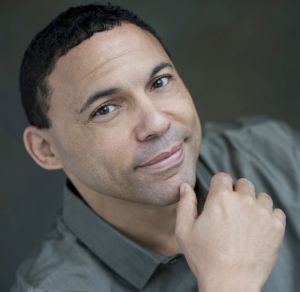
Tom Randle

Tom performed with the Cantate Choir in the Handel’s Messiah in January 2016.

Tom Randle, TenorPhotograph: Clare Park

Tom Randle began early studies in conducting and composition, but a scholarship to study voice soon meant a change in career direction. He made his début with the English National Opera as Tamino in The Magic Flute and has repeated the role with great success at Deutsche Oper Berlin, Glyndebourne Festival Opera, Hamburg, New Zealand and the Covent Garden Festival. Well known for his vivid and committed stage portrayals and a unique ability to embrace a wide variety of repertoire, Tom has emerged as one of the most exciting and versatile artists of his generation.

This Season, Tom Randle will partake in the world premiere of Marta, a new opera written by Wolfgang Mitterer, under the baton of Clement Power at Opéra de Lille followed by Die Soldaten with the Teatro Colon. Future engagements will include Elecktra with Berlin Staatsoper (co production with Aix) followed by Gran Teatre del Liceu.

Tom Randle made his Royal Opera House début as Essex in Phyllida Lloyd’s highly acclaimed production of Gloriana, which was later released as a feature film for BBC Television. Other appearances for the Royal Opera include Johnny Inkslinger in Paul Bunyan and the Fool in Gawain. Tom Randle is very active in the field of contemporary music with several world premières to his credit, many of which were written especially for him. This includes the role of Dionysus in John Buller’s opera The Bacchae for ENO, the world première of Peter Schat’s opera Symposium for the Netherlands Opera, and the world première of John Taverner’s oratorio The Apocalypse for the BBC Proms. He also created the role of Nunez in Mark-Anthony Turnage’s opera The Country of the Blind, written for the 50th Anniversary of the Aldeburgh Festival, and premiered and recorded Penderecki’s oratorio Credo for the Oregon Bach Festival. His intense portrayal of Judas in the world première of Birtwistle’s Last Supper under Daniel Barenboim at the Staatsoper Berlin (as well as Glyndebourne) won him outstanding critical acclaim.

Mr Randle devotes equal time to an active concert career, singing with many of the world’s leading orchestras including the Boston and Chicago Symphony Orchestra, Los Angeles Philharmonic, The London Symphony, Philharmonic and Philharmonia Orchestras, the Israel Philharmonic, Orchestre Philharmonique de Radio France, The English Concert with conductors such as Daniel Barenboim, Michael Tilson Thomas, Sir Colin Davis, Myung-Whung Chung, Yan-Pascal Tortelier, Ghennadi Rozhdestvensky, Richard Hickox, Harry Christophers, Trevor Pinnock, and Ivan Fischer. Amongst his recordings are the title role in Handel’s Samson with Harry Christophers on Collins Classics, Vaughan Williams’ A Cotswold Romance with the London Symphony Orchestra and Hickox for Chandos (both premiere recordings) and orchestral works by Luigi Nono on the EMI label. Tom also appeared as Molqui in the ground-breaking film version of John Adams’ Death of Klinghoffer for Channel 4, released on DVD, and as Monostatos in Kenneth Branagh’s The Magic Flute.

As a composer, his works have been performed in the UK, Europe and the US, including the Buxton and Presteigne Festivals, Lille Opera and the Broad Stage concert hall in Los Angeles. His latest opera ‘A telephone Call’ premieres this spring with Second Movement, and will later form part of the Tètè Opera Festival.

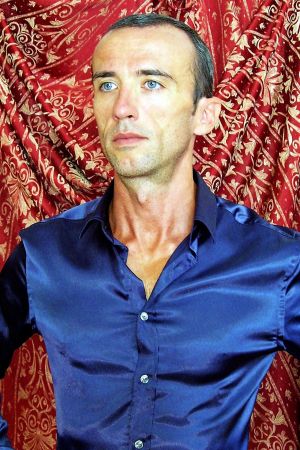
Francesco Ghelardini

Francesco performed with the Cantate Choir in the Handel’s Messiah in January 2016.

Francesco Gheraldini, Countertenor

Francesco Ghelardini was born in Florence and has studied Singing with Kathleen Lafferty at the Conservatorio Luigi Cherubini, where he also studied Recorder with David Bellugi. He attended classes in baroque performance with Rossana Bertini, Jill Feldmann, Gloria Banditelli and Christophe Rousset.

He has sung with such recognized conductors as Rinaldo Alessandrini, Peter Phillips, Andrew Lawrence-King, Alan Curtis and has been regularly invited to many leading festivals in Italy and abroad, such as Festival Monteverdiano di Cremona, Festival Pucciniano di Torre del Lago, Festival di Spoleto, Accademia Chigiana, Auditòrio Nacional de Musica de Madrid, Maggio Musicale Fiorentino, Milano Classica, Barocktage Stift Melk. He has sung the main part in Alessandro Melani’s Il Sacrificio d’Abel with Concerto Italiano under conductor Rinaldo Alessandrini at the early music festival Trigonale in Klagenfurt (Austria) and in Cuenca (Spain) at the Semàna Musica Religiosa. He has sung the title role in Carissimi’s Historia di Job at the Queen Elizabeth Hall in London and at Festival Barocco in Viterbo. In Florence at the Teatro della Pergola he has played the role of Amore Divino in A. Scarlatti’s Trionfo della Vergine SS with the baroque orchestra Il Rossignolo and the roles of Secrecy, Mopsa and Chinese Man in Purcell’s Fairy Queen at the Teatro Goldoni with Maggio Fiorentino Baroque Orchestra. Most recently he has been Cornelia in Scarlatti’s Il Trionfo dell’Onore at the Teatro Verdi in Pisa.

His recordings, for labels like Opus111, Divox Antiqua and Tactus, include Monteverdi’s Vespro della Beata Vergine for OPUS111 with Concerto Italiano and Cesti’s Le Disgrazie d’Amore for Hyperion with Auser Musici (The Courtier).

Programme Notes – Handel’s Messiah

I know that my Redeemer liveth, and that he shall stand at the latter day upon the earth. And though worms destroy this body, yet in my flesh shall I see God.   Book of Job xix:25-26
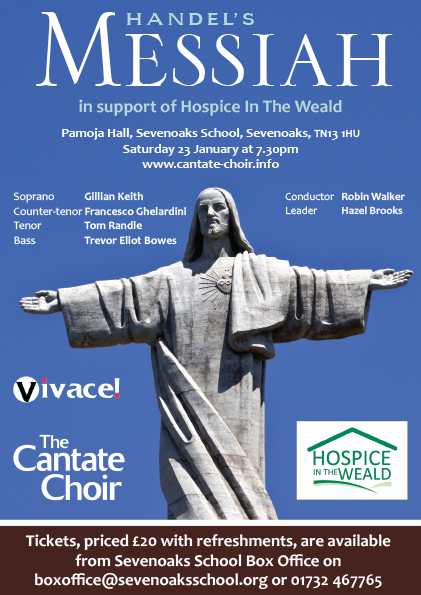
Poster for Handel's Messiah concert given by Cantate Choir in January 2016

These words, which begin Part III of the mighty oratorio ‘Messiah’, were inscribed on George Frideric Handel’s tomb in Poets’ Corner in Westminster Abbey when he died in 1759. This aria, written in the optimistic, bright and certain key of E major, opens with two notes (dominant rising to tonic) and sums up for me the entire piece; without any shadow of a doubt, with no possibility for confusion, Handel says, ‘I believe’. He genuinely felt that the whole piece was given to him by God. As Patrick Kavenaugh records in his Spiritual Lives of the Great Composers, Handel said to his bemused servant “I did think I did see all Heaven before me, and the great God Himself.” Handel had just finished writing a movement that would take its place in history as the Hallelujah Chorus.

How fitting it is that tonight’s performance is in aid of The Hospice in the Weald. In 1741, two letters arrived, which changed Handel’s position and musical history forever. First came an invitation from the Duke of Devonshire to come to Dublin and provide a series of benefit concerts ‘For the relief of the prisoners in the several gaols, and for the support of Mercer’s Hospital in Stephen Street, and of the Charitable Infirmary on the Inn’s Quay’. Then, a letter arrived from Charles Jennens, a literary scholar and editor of Shakespeare’s plays, who had previously written libretti for Handel. The letter contained Old and New Testament texts, which Handel read and re-read and was so moved that he immediately embarked on writing a sacred opera using them. Messiah premiered on April 13, 1742 in Dublin as a charitable benefit, raising 400 pounds and freeing 142 men from debtor’s prison. It has not been out of performance for a single year since, a record unsurpassed by any other classical work. It was performed again and again for charitable concerts and Handel would not take a penny from the ticket sales, believing that God, not he, had written the piece. At his death, he bequeathed the manuscript and parts to the Foundling Hospital, founded by Thomas Coram in 1739, which continues to benefit to this day from performances of Messiah. Charles Burney, the 18th century music historian, remarked that Handel’s Messiah “fed the hungry, clothed the naked, and fostered the orphan.”

Why then, is Messiah such an enduring and monumental piece? Why is it performed every year all over the world? Why are there choral societies committed to performing nothing else? It is not a typical oratorio; there are no named characters, no plot and no narrative. There is no drama of action or personalities and no dialogue. Our usual thirst for soap opera shenanigans will not be satisfied here. So why do we keep coming back for more?

For one thing, it is a work, whose three parts, take in the entire sweep of the traditions and beliefs of the Christian faith and follows the liturgical year:

  • Part I- Prophecy of Salvation, the birth of Christ Jesus (Advent, Christmas)
  • Part II- Crucifixion and Death (Lent, Easter, Ascension, Pentecost)
  • Part III- Resurrection and the promise of eternal life for believers (End of year and end of time)

The second reason for its recurrent popularity is that it is simply full of good tunes and rousing choruses, which enable us as Everyman to grasp something of the ineffable mysteries of these sacred texts and to go away feeling spiritually uplifted regardless of our beliefs and understandings.

The main reason, however, has to be the sheer genius of the man (or perhaps it really was his divine inspiration). Handel paints the texts so vividly and gloriously that it seems impossible not to be profoundly moved by each and every aria, chorus and instrumental interlude.

The libretto by Jennens is also monumental and scholarly. The texts are compiled from the Bible: mostly from the Old Testament of the King James Bible, but with several psalms taken from the Book of Common Prayer. He takes lines from here and there to construct ‘scenes’ of meditation upon aspects of the Messiah. We perform Part I complete, which takes us through the surprisingly restrained prophecies and announcements of Christ’s coming, through the excitement of the birth (For unto us a child is born), the appearance of angels before the shepherds (Glory to God) and on to the great optimism of the believers (Rejoice greatly, He shall feed his flocks).

Part II deals with Christ’s sufferings and betrayal. We cut numbers 27-37, which deal with the actual crucifixion and reception into Heaven, and take up the scene with the moving reaction to his death (How beautiful are the feet) and the gradual spreading of the gospel despite the world’s rejection (Hallelujah). Part III is also shortened to focus on the certainty of believers that the Redeemer is still very much alive in men’s hearts and that when ‘The Trumpet shall sound’ death and sin will be conquered and we will find ourselves with God. The final chorus maintains the focus solely on the Messiah, not the unworthy mortals who usually receive some absolution at the end of such works. “Worthy is the Lamb that was slain and hath redeemed us to God by His blood, to receive power, and riches, and wisdom, and strength, and honour, and glory, and blessing. Blessing, and honour, and glory, and power, be unto him who sitteth upon the throne and unto the lamb for ever and ever, Amen.”

Sara Kemsley

Messiah Triumph

The Cantate Choir’s recent performance of Handel’s Messiah raised a fantastic £10,500, exceeding our original target. The money raised went to Hospice in the Weald and we were delighted to be able to support them with our first charity concert. We weren’t sure if we would manage to fill the Pamoja Hall in Sevenoaks School but it was a sell out!

We had a fantastic time performing with our regular partner orchestra ‘Vivace!’ and the wonderful soloists. For more details of the concert follow this link: https://www.cantate-choir.info/gala-concert-handels-messiah/

We would like to thank our sponsors and advertisers who helped us with the fundraising and to everyone who donated prizes for the charity raffle. And of course, thank you to all those who came and were such a great audience for us.

It was a thrilling evening – We hope you enjoyed it as much as we did.

For a link to a review of the concert follow the link: https://www.cantate-choir.info/review-of-handels-messiah-by-graeme-fife/


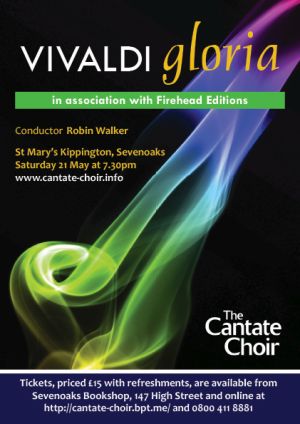
Vivaldi Gloria and works by living composers

Saturday 21 May 2016, 7.30pm, St Mary’s Kippington, Sevenoaks

Poster for Cantate Choir's Vivaldi Gloria concert in May 2016Vivaldi Gloria and works by living composers in association with Firehead Editions.

The Cantate Choir will be performing Vivaldi’s Gloria in May. Written in around 1715 it is a joyous, sparkling piece for choir and soloists, with distinctive, sunny harmonies and beautifully expressive moments. This lovely, uplifting music forms the centrepiece of our concert.

Following our tradition of presenting new music, we will also be performing a selection of pieces from Firehead Editions. This is a collective of three contemporary composers: Frederick Frahm, Huw Morgan and Nicholas Wibberley. They have written music for a wide variety of different contexts and are all distinguished composers, conductors and performers. Their music is intelligent, well-considered and attractive, and is performed the world over. We are delighted to be presenting a selection of their recent works, both sacred and secular, which we are sure you will enjoy.

We look forward to welcoming you to an inspiring evening of old and new music.

Tickets are £15 and will be available at Sevenoaks Bookshop or online and by phone from Brown Paper Tickets and 0800 411 8881. They will also available from members of the choir.

You can register to receive e-mail updates from the home page of this website.

Our 2020 Programme

 SADLY WE WERE NOT ABLE TO PEFORM THIS PROGRAMME DUE TO COVID BUT WE HAVE KEPT THIS AS A RECORD OF WHAT WE HAD ORIGINALLY PLANNED.

Saturday 20th June 2020, 7.30pm – St Botolph’s Church, Chevening

Midsummer Idyll – folk songs and part songs for a summer evening.


Saturday 7th November 2020, 7.30pm – St Mary’s Church, Kippington

Gunpowder, Treason and Plot – A journey through pivotal moments in history with music for times of Revolution.


Saturday 12th December 2020, 7.30pm – St Mary’s Church, Riverhead

O Tannenbaum – a feast of seasonal music and traditional carols for all the family, surrounded by St Mary’s Christmas Tree Festival.